Local Guide
Frozen Pipes in Utah Winters: Prevention & Emergency Response
Utah's cold snaps freeze and burst pipes every winter. Learn how to prevent frozen pipes, how to thaw them safely, and what to do if one bursts.
Updated March 17, 2026 · Water Damage Restoration Salt Lake City
Dealing with water damage right now? Don't wait — mold starts in 24 hours.
Call (435) 485-9530Every winter, Utah’s cold snaps and big temperature swings send a wave of frozen-pipe calls across the Salt Lake Valley. A frozen pipe is bad; a frozen pipe that bursts is a flood waiting to happen. Here’s how to prevent both.
Why pipes freeze and burst here
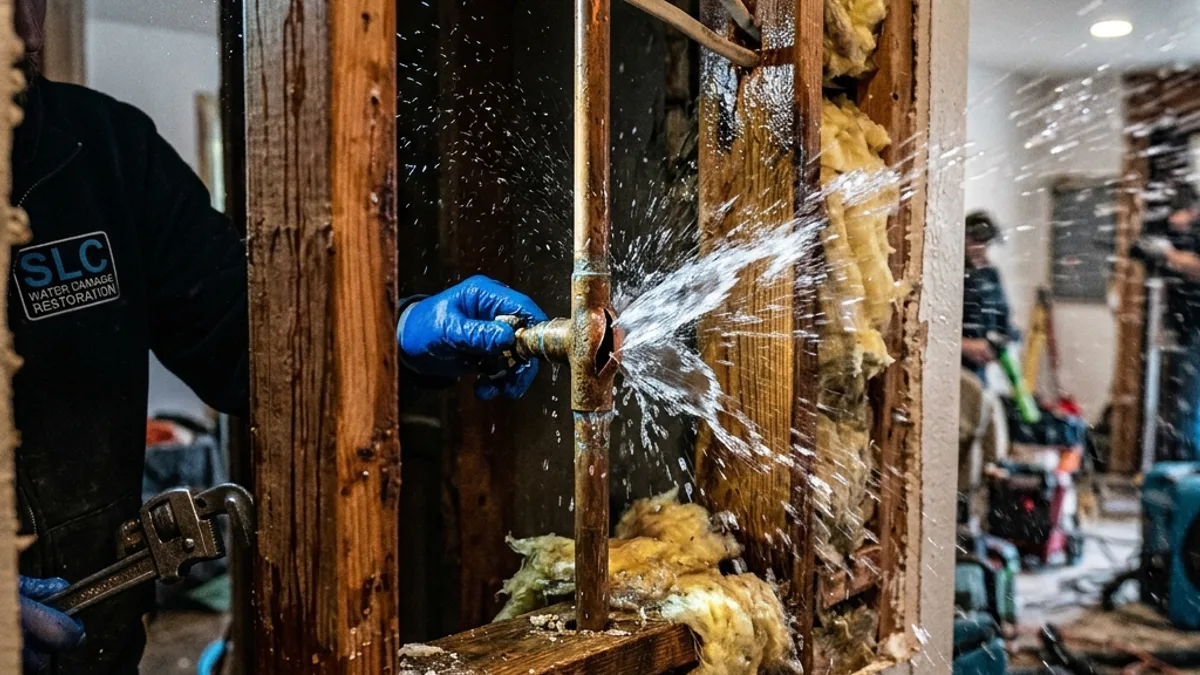
When water freezes, it expands. Inside a closed pipe, that expanding ice creates enormous pressure — not at the ice itself, but between the ice and a closed faucet downstream. Eventually the pipe or a fitting fails, and when the ice thaws, water pours out. That’s how a freeze becomes a burst pipe.
Foothill homes in Sandy and Draper are especially exposed because of dramatic day-night temperature swings near the canyons.
Which pipes are most at risk
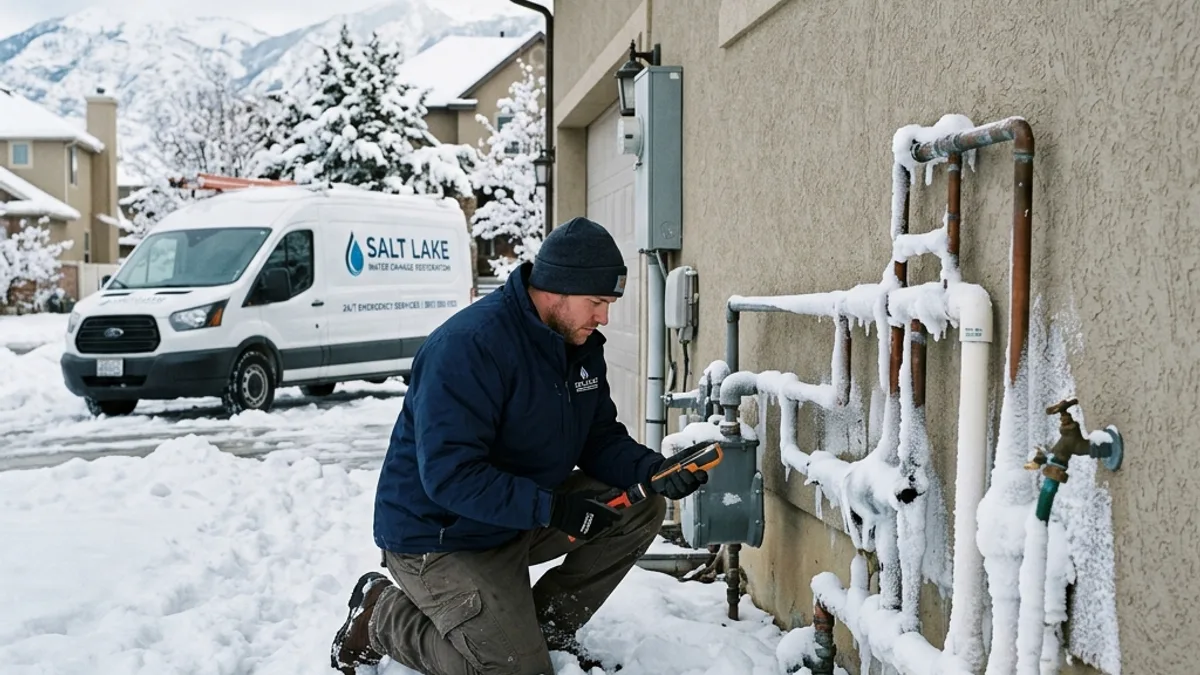
- Pipes in unheated areas: garages, crawl spaces, attics, basements
- Pipes along exterior walls with little insulation
- Outdoor hose bibs and sprinkler lines
- Any pipe exposed to a draft from a gap or vent
How to prevent frozen pipes
A little prep goes a long way:
- Insulate exposed pipes with foam sleeves.
- Keep the heat on — never below 55°F, even when you’re away.
- Let faucets drip during hard freezes; moving water resists freezing.
- Open cabinet doors under sinks on exterior walls to let warm air in.
- Disconnect garden hoses and shut off/drain outdoor lines before winter.
- Seal drafts near pipes in the rim joist and crawl space.
These same habits help prevent the basement flooding that often follows a winter pipe failure.
Pipe froze and now it's leaking?
A thawing frozen pipe can flood fast. We're on call 24/7 through every Utah cold snap.
How to safely thaw a frozen pipe
If a faucet only trickles and you suspect a freeze:
- Open the faucet so water and steam can escape as the ice melts.
- Apply gentle heat to the frozen section — a hair dryer, heating pad, or towels soaked in warm water. Start near the faucet and work toward the cold spot.
- Never use an open flame or a torch — it’s a fire risk and can damage the pipe.
- Know where your main shutoff is in case the pipe has already cracked.
If you can’t reach the frozen area or the pipe has already burst, shut off the main and follow what to do after water damage.
What to do if a frozen pipe bursts
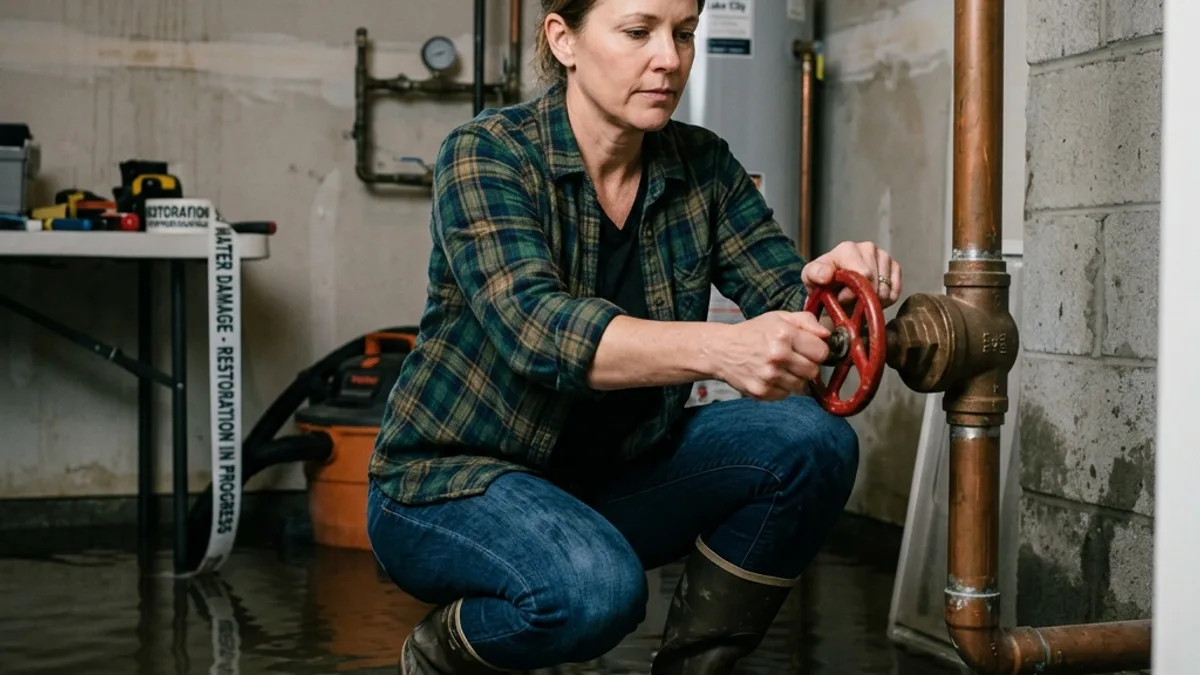
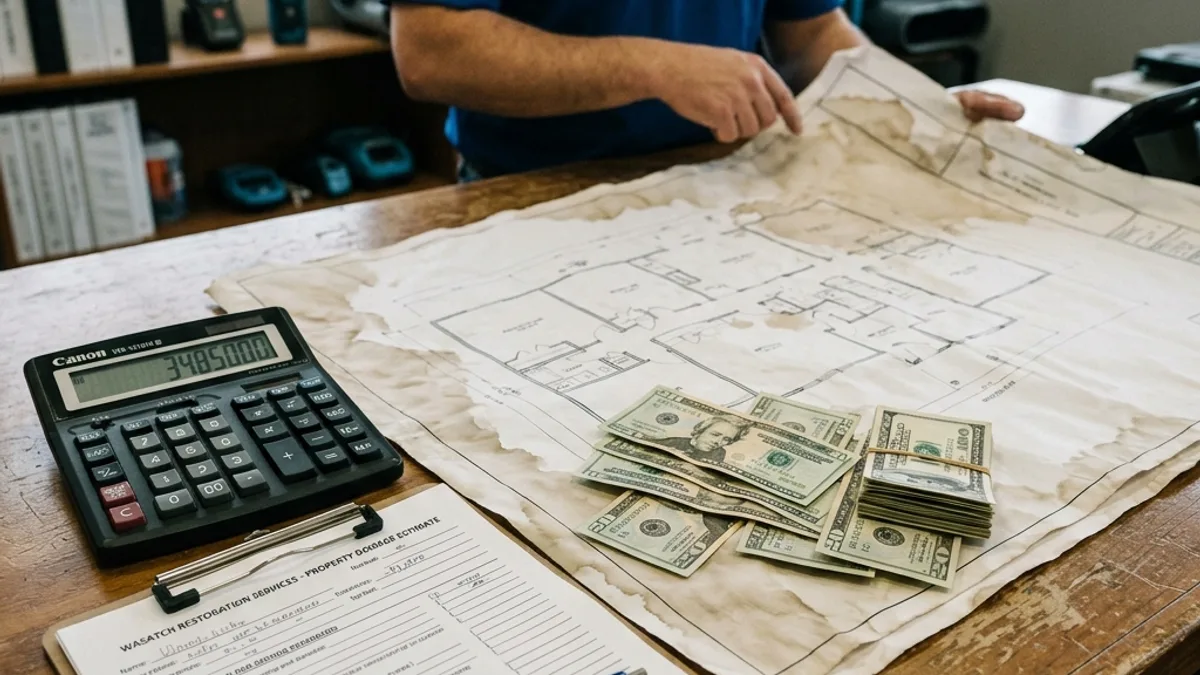
Speed matters. Shut off the main water valve immediately, document the damage for your insurance claim, and call for professional extraction and structural drying. Frozen-pipe bursts often happen inside walls and ceilings, so the water spreads further than it appears — exactly the hidden moisture that causes mold if not dried properly. Our cost guide covers what to expect on price.
The bottom line
In Utah, frozen pipes are a predictable winter risk — and largely preventable with insulation, steady heat, and a little vigilance during cold snaps. If one does burst, fast shutoff and professional drying keep a scary moment from becoming a major loss. We answer 24/7 all winter long for homeowners across Salt Lake City and the valley.
Need Help? Request a Free Assessment
Tell us what happened and a licensed Salt Lake City restoration specialist will get right back to you.