Local Guide
Basement Flooding in Salt Lake City: Causes, Cleanup & Prevention
Why Salt Lake City basements flood — from spring snowmelt to sump-pump failures — plus how professional cleanup works and how to keep it from happening again.
Updated May 9, 2026 · Water Damage Restoration Salt Lake City
Dealing with water damage right now? Don't wait — mold starts in 24 hours.
Call (435) 485-9530Basements are the most common place we pump water out of in the Salt Lake Valley — and the most expensive when they’re finished. Water flows downhill and collects at the lowest point of your home, which means a small problem upstairs becomes a big problem in the basement.
Why Salt Lake City basements flood
Our local geography and weather create a few signature causes:
- Spring snowmelt. As the Wasatch snowpack melts, the water table rises and saturated soil pushes water against foundations — especially in foothill areas like Sandy and Draper.
- Sump pump failure. A pump that’s undersized, unplugged, or knocked out by a power outage during a storm is one of the top causes of finished-basement floods in West Jordan.
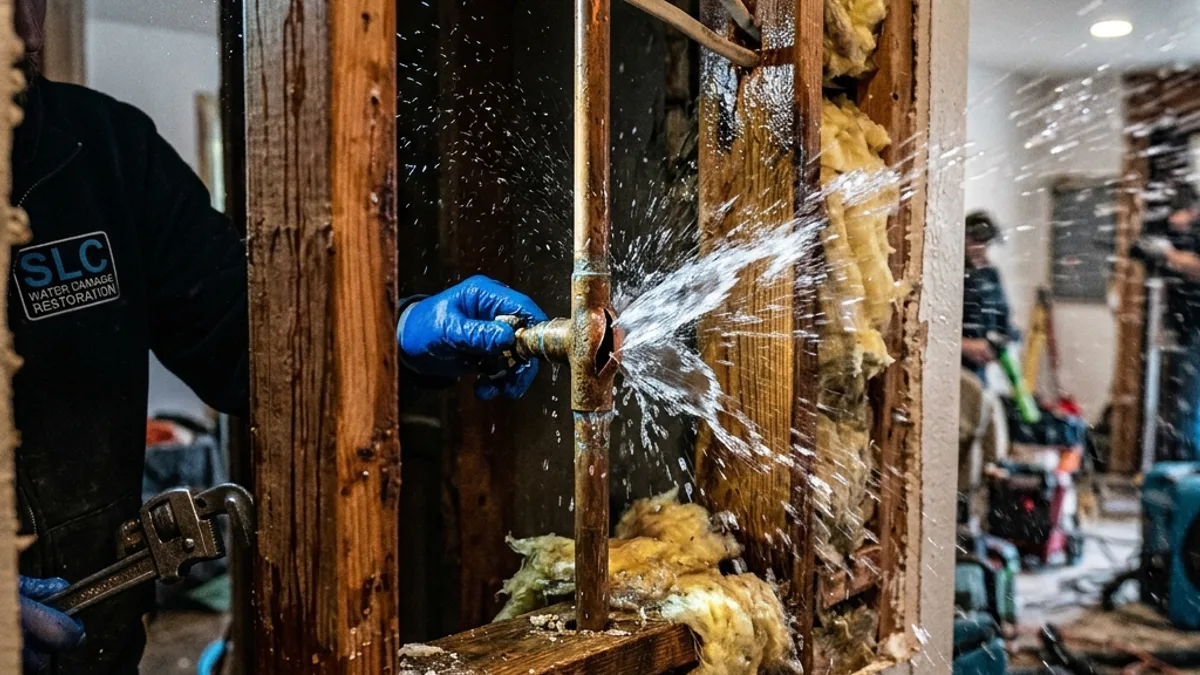
- Burst or frozen pipes. A burst pipe on an upper floor sends water straight down.
- Sewer backups. When the city main surcharges, sewage can back up through basement drains — a hazardous category-3 cleanup.
- Foundation cracks and poor grading. Surface water finds its way in through the path of least resistance.
The first moves when your basement floods
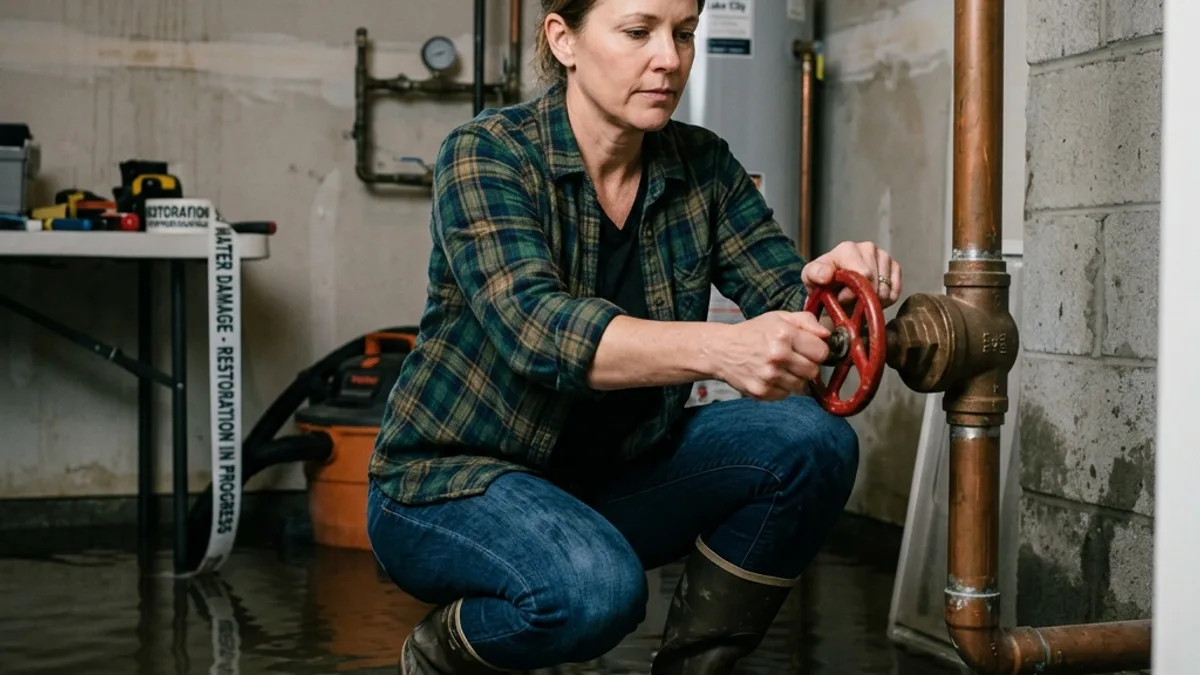
Safety first: do not enter standing water in a basement until the power to that level is off — submerged outlets and appliances make the water deadly. Then follow the full sequence in what to do after water damage: stop the source if you can, document everything, and call for extraction.
Standing water in your basement?
Every hour it sits, it climbs into walls and subfloor. We pump, dry, and restore — 24/7.
How professional basement flood cleanup works
Finished basements are tricky because water hides behind drywall, under carpet pad, and inside the bottom plates of framed walls. Our process:
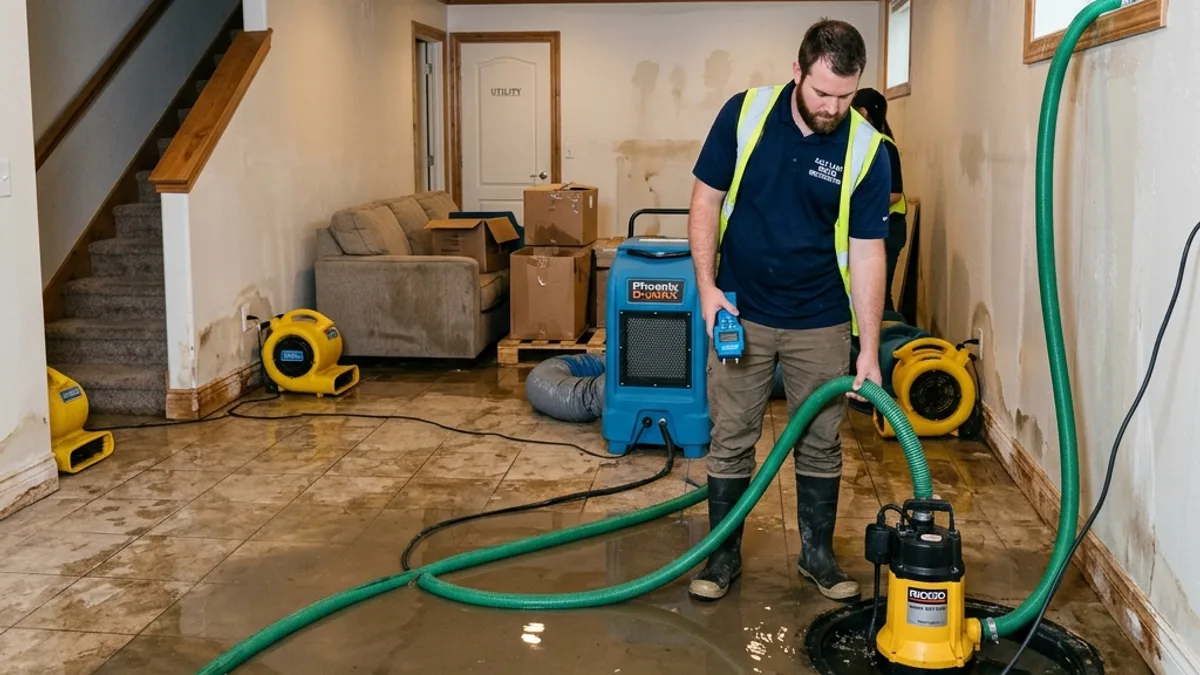
- Pump and extract standing water with high-volume equipment.
- Remove unsalvageable materials — soaked carpet pad, the bottom few inches of drywall, wet insulation.
- Map remaining moisture with meters so nothing wet gets sealed up.
- Dry the structure with air movers and dehumidifiers — the structural drying process is what prevents long-term problems.
- Remediate any mold that has already started and restore finishes.
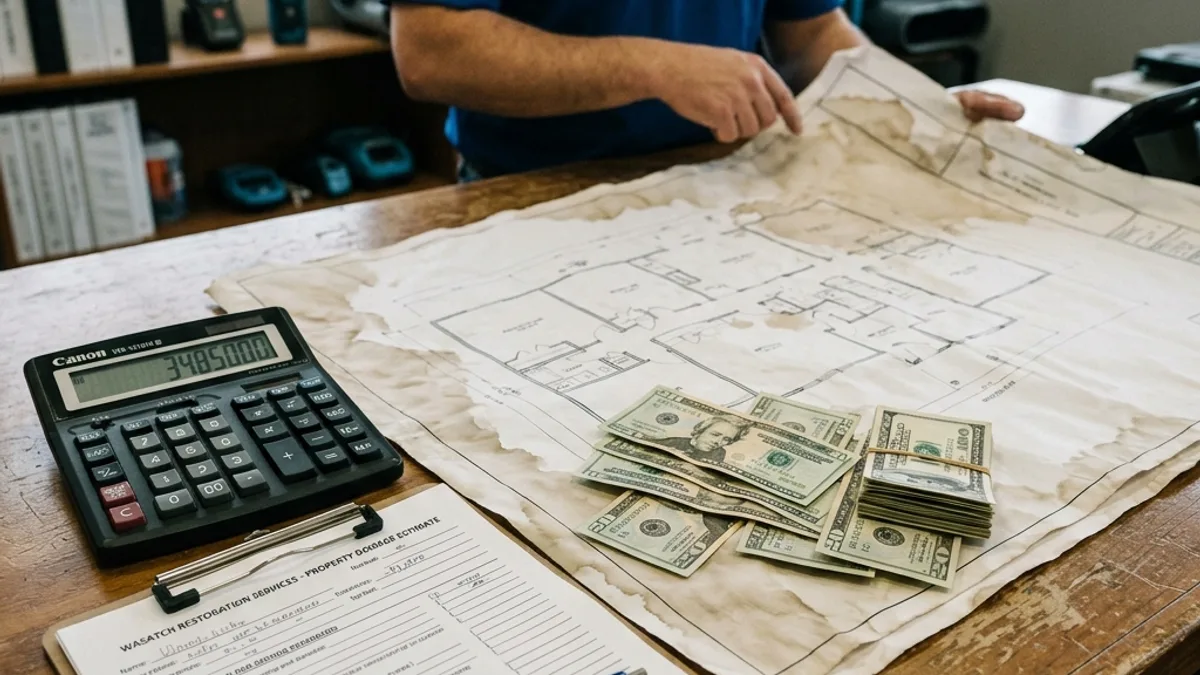
Because category and square footage drive the bill, basement jobs vary widely — see our Salt Lake City cost guide for realistic ranges.
Preventing the next basement flood
- Maintain your sump pump. Test it seasonally and install a battery backup for power outages.
- Extend downspouts at least 6 feet from the foundation.
- Improve grading so soil slopes away from the house.
- Seal foundation cracks before snowmelt season.
- Install a backwater valve to stop sewer surcharge from entering.
- Watch for early warning signs — our guide to hidden water damage helps you catch seepage before it becomes a flood.
The bottom line
A flooded basement in Salt Lake City is rarely a surprise once you understand the local causes — and it’s very preventable with a maintained sump pump and good drainage. When it does happen, fast extraction and proper drying are what protect your finished space and your wallet. We serve every community in the valley and answer the phone 24/7.
Need Help? Request a Free Assessment
Tell us what happened and a licensed Salt Lake City restoration specialist will get right back to you.