Education
Clean, Gray & Black Water: The 3 Categories of Water Damage Explained
Not all water damage is equal. Learn the 3 categories of water damage — clean, gray, and black water — what each means for safety, cleanup, and cost.
Updated April 19, 2026 · Water Damage Restoration Salt Lake City
Dealing with water damage right now? Don't wait — mold starts in 24 hours.
Call (435) 485-9530When a restoration professional looks at your flooded room, the first thing they assess isn’t how much water there is — it’s what kind of water it is. The industry sorts water damage into three categories, and that category drives the safety precautions, the cleanup method, and the cost.
Category 1: Clean water
This is water from a sanitary source — a supply line, a faucet, a burst pipe, or an overflowing tub with no contaminants. It poses no immediate health threat at first.
The catch: clean water doesn’t stay clean. Once it sits and soaks into building materials, it degrades. After 24–48 hours, category 1 can deteriorate into category 2 as bacteria multiply — another reason to follow what to do after water damage quickly. Category 1 jobs are the cheapest and most likely to save your materials.
Category 2: Gray water
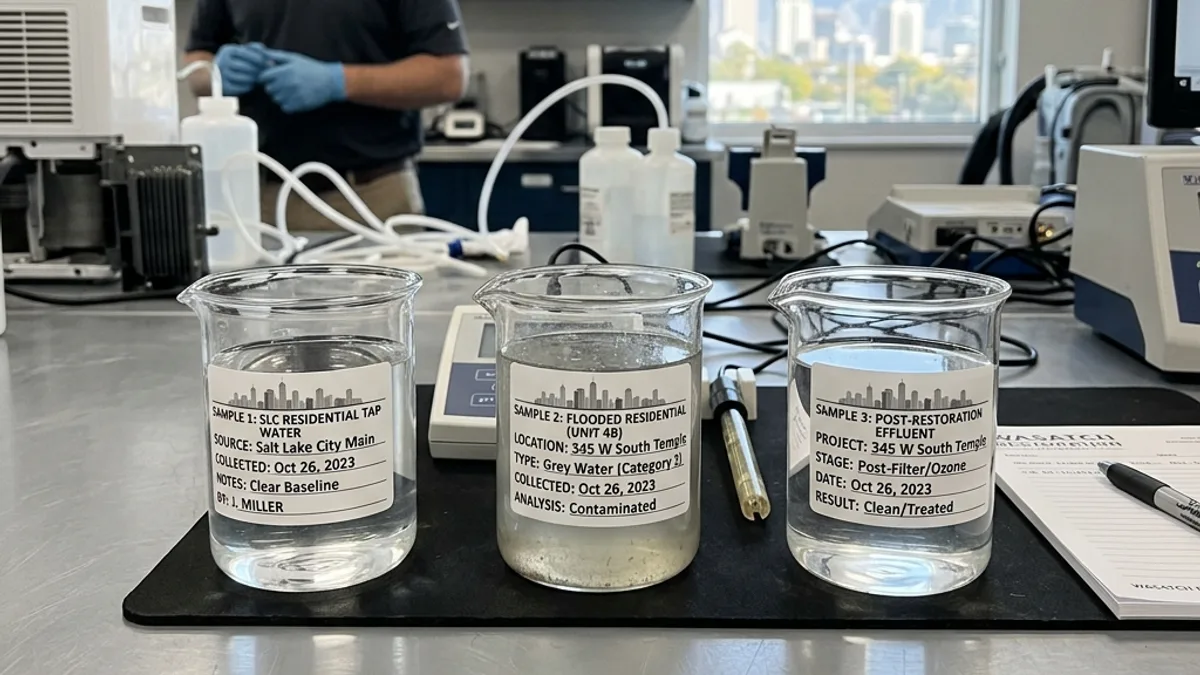
Gray water contains significant contamination and can cause illness if ingested or contacted. Common sources:
- Dishwasher or washing machine discharge
- Toilet overflow containing urine but no feces
- Sump pump failures
- Aquarium or waterbed leaks
Gray water requires more aggressive cleaning and disinfection, and more porous materials have to be discarded rather than dried. If left too long, it escalates to category 3.
Not sure what category you're dealing with?
Guessing wrong is a health risk. Our certified crews assess and handle every category safely.
Category 3: Black water
Black water is grossly contaminated and can cause serious illness or death. It’s the most dangerous to handle:
- Sewage backups (see sewage backup cleanup)
- Flooding from rivers, streams, or storm surge
- Any water carrying feces, chemicals, or toxins
- Standing water that has grown microbes over time
Category 3 demands full personal protective equipment, professional-grade disinfectants, and the removal and disposal of most porous materials it touched. This is never a DIY job. The contamination also accelerates mold growth and biological hazards.
Why category drives cost
Here’s how the categories map to your bill — the higher the category, the more removal, PPE, disinfection, and disposal involved:
| Category | Risk | Typical cost impact |
|---|---|---|
| 1 — Clean | Low | Lowest — more materials saved |
| 2 — Gray | Moderate | Mid — more removal & disinfection |
| 3 — Black | Severe | Highest — full PPE & disposal |
For full pricing context, see our Salt Lake City cost guide.
Categories and your insurance
Your policy may treat categories differently, and the source of the water matters for coverage. A sudden clean-water pipe burst is usually covered; outside flooding (often category 3) typically needs separate flood insurance. Document the source carefully — our insurance claim guide explains why it matters.
The bottom line
The category of water tells you how urgent and how hazardous your situation is. Clean water gives you a little time but degrades fast; gray and black water are health risks that need professional handling immediately. When in doubt, treat standing water as contaminated and call a certified team. We serve homeowners across Salt Lake City and the entire valley, 24/7.
Need Help? Request a Free Assessment
Tell us what happened and a licensed Salt Lake City restoration specialist will get right back to you.